Your printed circuit board assembly (PCBA) passes every test on the line. Solder joints are clean, components are placed correctly, and the board powers up exactly as designed. Then the real work begins, and it’s the part most engineering teams underestimate: turning that board into a finished, shippable product.
Enclosure assembly. Cabling and harnessing. Firmware loading. Final functional testing. Custom packaging. Each step needs its own vendor relationship, its own quality checks, its own handoff, unless one partner owns the whole process. That’s box build, and getting it wrong after the board is done is one of the most common reasons hardware launches slip.
Imagine explaining a six-week delay to your investors, not because the electronics failed, but because nobody owned what happened after the PCBA left the line. A single box build partner would have caught that gap before it ever became a delay.
What Box Build Actually Includes
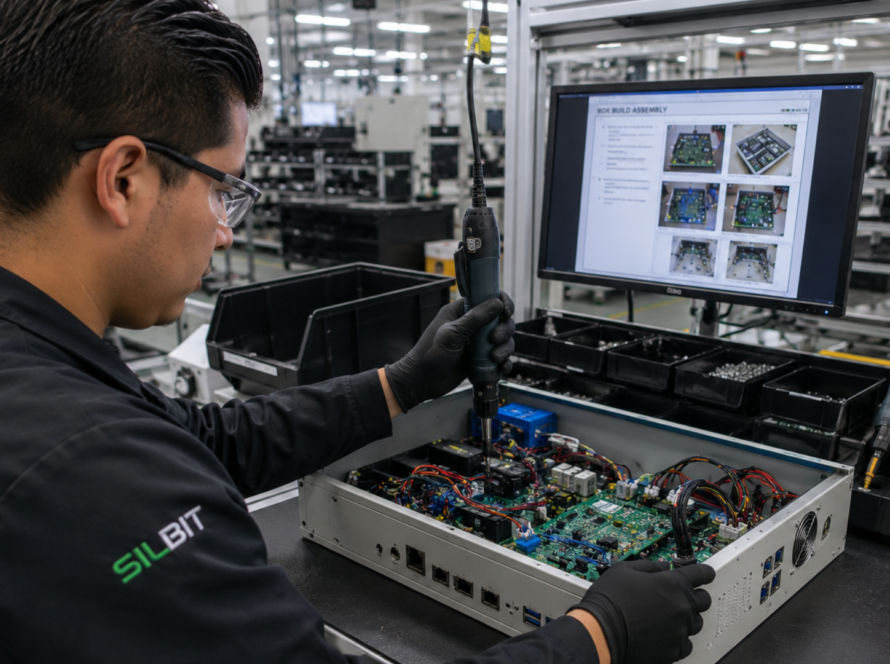
Box build, sometimes called system integration, is the process of turning a tested printed circuit board assembly into a complete, ready-to-ship product. At SILBIT, that process runs through eight coordinated stations:
- Kitting: components and sub-assemblies staged and verified before the line starts.
- Enclosure assembly: mounting the PCBA into its housing.
- Cabling and wire harness assembly: custom harnesses built and routed to the design’s exact specification.
- Firmware loading: programming the board with the correct version before final assembly closes.
- Mechanical integration: fasteners, connectors, and moving parts assembled to spec.
- Functional testing: custom test fixtures validate the finished unit, not just the bare board.
- Traceability logging: every unit’s build history recorded automatically at each station.
- Custom packaging: retail-ready or fulfillment-ready packaging, configured per program.
Why This Step Gets Underestimated
Engineering teams plan carefully for PCB design and PCBA. Box build often gets treated as an afterthought, something to figure out closer to launch. That works until volume increases, or until a vendor handoff drops a step, and a traceability gap shows up during a field failure investigation with no clear record of which station built which unit.
Kitting and Harnesses: The Steps Most Often Missed
Two of the most overlooked pieces of box build are kitting and wire harness assembly. Kitting failures (a missing fastener, a wrong-revision cable) cause line stoppages that are expensive to diagnose after the fact. Harnesses that aren’t designed and built to the same standard as the board itself become the weakest link in an otherwise well-engineered product.
When to Keep Box Build In-House vs. When to Bring in a Partner
If your team is coordinating more than two vendors just to get one finished product out the door, that complexity is a cost, even if it never shows up as a line item. The signs it’s time to consolidate box build with your electronics manufacturing services (EMS) partner:
- You’re scaling past prototype volume and vendor coordination is becoming a full-time job.
- A field failure happened and you couldn’t trace which station or batch built the unit.
- Your enclosure, cabling, and PCBA vendors are pointing at each other when something goes wrong.
These are three of eight signs worth checking. If more than one sounds familiar, the full list is here: 8 signs your product is ready to outsource box build.
How SILBIT Approaches Box Build
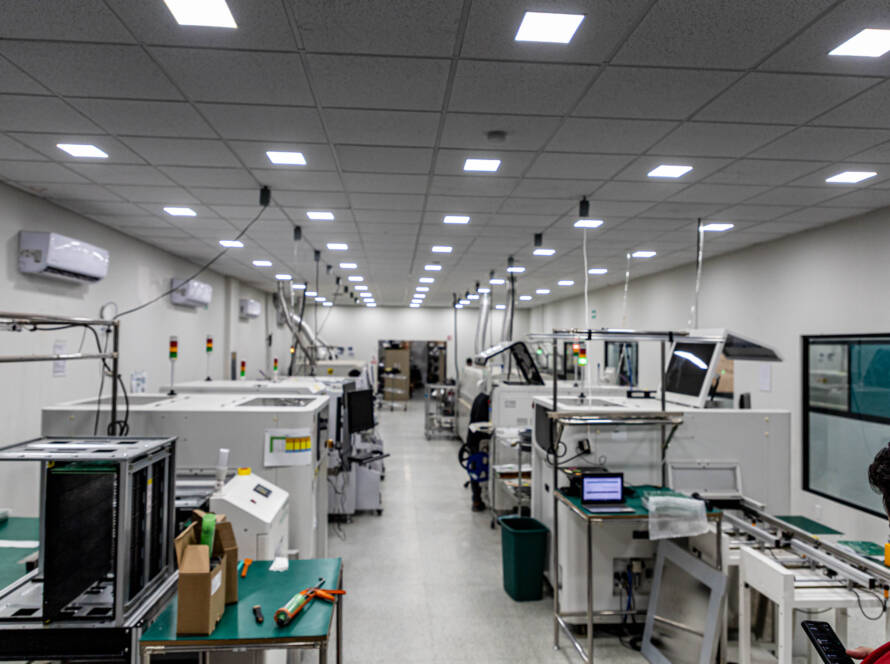
SILBIT runs box build and system integration under the same roof as PCB assembly, with automatic traceability logging at every station, configured per program.* That means one point of accountability from the board to the finished, packaged product, backed by 12+ years of experience and 60 to 70 engineers and technicians on staff supporting the process.
All of it happens in Guadalajara, which means ground transit of three to five days into the United States and Canada, and overlapping time zones with North American engineering teams. If the compliance side is what you need to understand first, that is covered separately in electronics manufacturing in Mexico under IMMEX and USMCA.
Ready to see whether your product is ready to move to a single box build partner? Get a free manufacturing assessment from our engineering team, and find out before your next launch, not after.
*Subject to product classification under applicable trade rules and program configuration.